Empty Hands: A Blackletter Font with Modern Soul
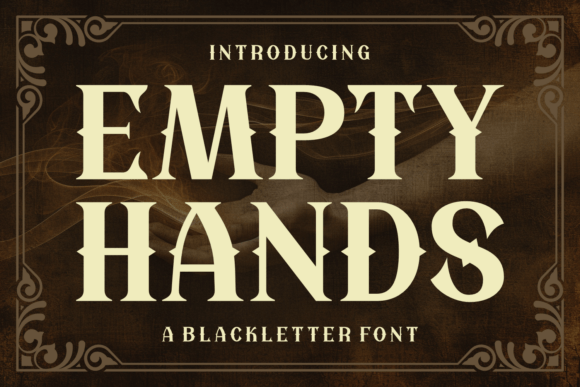
There's a certain weight to typefaces that carry history in their strokes. They don't just spell out words; they evoke a feeling, a time period, a story. Empty Hands is one of those typefaces. At its core, it's a traditional blackletter font, but it's far from a simple historical replica. It's been carefully crafted to blend the stark, structured beauty of Gothic letterforms with a subtle, approachable warmth, making it a surprisingly versatile tool in a modern designer's arsenal.
What makes Empty Hands stand out? Look closely, and you'll see the classic hallmarks of blackletter: the vertical stress, the sharp, angular transitions, and the dramatic contrast between thick and thin strokes. Yet, it avoids feeling overly severe or unapproachable. There's a vintage charm woven into its character—a nod to old signage and the hand-rendered quality of medieval manuscripts. This isn't a font that shouts; it declares. It possesses a quiet authority and a refined aesthetic that commands attention without resorting to visual noise. It's a premium font that feels both timeless and intentional.
Where Does Empty Hands Truly Shine?
Understanding a font's personality is one thing; knowing where to deploy it is another. Empty Hands excels in projects where you need to make a statement with a sense of history, craft, or drama. Think of it as your go-to display font for headlines, logos, and single-word accents where maximum impact is required.
- Branding with Old-World Charm: It's a natural fit for craft breweries, distilleries, artisan bakeries, and any brand that wants to communicate tradition, craftsmanship, and authenticity. Imagine it on a beer label, a coffee shop menu, or the logo for a bespoke tailor.
- Fantasy & Historical Design: For book covers in the fantasy or historical fiction genres, Empty Hands provides an instant sense of setting. It works beautifully for chapter titles, series logos, or promotional posters for games and events rooted in lore.
- Decorative Packaging & Posters: When a product or event needs to feel special and substantial, this typeface delivers. Use it for the name on a luxury soap box, a headline for a vintage market poster, or the title of a documentary film.
- Editorial & Web Accents: Used sparingly, it can add a powerful accent to editorial design. A drop cap, a pull quote, or a section header in Empty Hands can break the monotony of body text and draw the reader's eye. On the web, it can create a striking hero section header, though careful pairing is key.
Practical Guidance for Using a Font Like This
Integrating a character-rich blackletter font like Empty Hands into a project requires a bit of strategy. Its strength lies in its specificity, so evaluating the fit is your first step. Ask yourself: does my project's theme align with history, tradition, drama, or craftsmanship? If the answer is yes, you're on the right track.
Next, consider readability. Blackletter scripts are not designed for long paragraphs of body copy. Their intricate forms can become a visual challenge at small sizes. Use Empty Hands for short, impactful text: a brand name, a headline, a single-word call-to-action. For body text, pair it with a highly legible sans serif font or a clean serif font. A good font pairing creates contrast and hierarchy, letting Empty Hands do the heavy lifting up top while a simpler typeface handles the details below.
Before committing, always test the font in context. Set your intended headline or logo word. Check the letter spacing—some blackletter fonts can benefit from a touch of tracking to improve clarity. Review the included styles; many premium fonts come with alternates, ligatures, or stylistic sets that can add unique flair to your design. Finally, ensure the licensing matches your project's needs, whether it's for a single client, a product line, or a social media campaign. A commercial font like Empty Hands is a valuable design asset, and using it correctly protects your work and respects the creator.
In the end, Empty Hands is more than just a collection of glyphs. It's a tool for storytelling. It helps build a brand identity that feels rooted and intentional, creates packaging design that stands out on a shelf, and crafts social media graphics with a distinct, memorable voice. Used thoughtfully, it doesn't just decorate a design—it defines it.